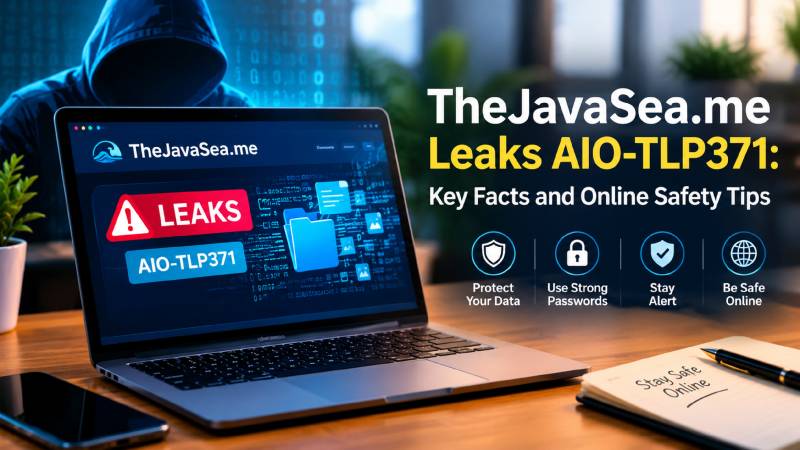
TheJavaSea.me Leaks AIO-TLP371: Searches for “thejavasea.me leaks aio-tlp371” have jumped, and most results don’t answer the real question. Is this a confirmed data breach? A software package? Something else?
Short answer: nobody has verified it. The label floats around leak forums without proof of what’s inside. That gap is exactly where scams live.
This guide explains what is actually known, why the files are dangerous, and what to do instead.
What Is thejavasea.me?
TheJavaSea describes itself as a “Technology World” forum covering laptops, Linux tutorials, coding, SEO, proxies and hosting. It also runs a leaks section, which is the part that draws the traffic. The site’s own tag pages show threads filed under “leaks,” “nudes” and similar labels.
So it’s a mixed forum. Some of it is ordinary tech talk. Some content may be shared without the consent of those involved.
What Does “Leaks AIO-TLP371” Actually Mean?
The name breaks into two parts
Most write-ups treat AIO as “All-In-One” — a bundle of many folders packed into one archive. TLP371 is read as an internal batch or release number, the kind uploaders use to track their own posts.
That reading makes sense. But it is a reading, not a fact.
Two naming collisions worth knowing
“TLP” is an old security term: Traffic Light Protocol, the colour system for marking how far information can be shared. A Toshiba photocoupler part is also sold as TLP371.
So the label probably means nothing technical. It’s just a filename.
What is verified — and what isn’t
TheJavaSea.me Leaks AIO-TLP371: Search results show the tag attached to forum threads advertising very large archives, including material presented as private or intimate images.
What is not verified: who compiled it, where it came from, whether the files are genuine, whether the archive is complete, or whether anyone involved agreed to it. There is no independent evidence tying AIO-TLP371 to a known corporate breach or a confirmed credential dump.
Treat every claim about its contents as unconfirmed.
Why Chasing These Files Is a Bad Trade
Malware hides behind curiosity
Archives advertised as “leaks” are a classic delivery method. The file may be repacked with an infostealer, a remote access tool, or a loader that pulls more malware later. You run one setup file and the attacker gets your browser cookies, saved passwords and session tokens.
Fake pages want your login
Leak sites and their copycats often put a “premium access” wall in front of the download. It asks for an email, a password, sometimes a card. That page exists to collect credentials, not to give you files.
The legal side is real
Distributing someone’s private images or personal records without consent is illegal in most countries, including under revenge-porn and data-protection laws. Downloading doesn’t make you a spectator. In many jurisdictions it makes you part of the chain of distribution.
Real people are on the other end
The most overlooked cost. If a bundle contains intimate images, those are actual people whose lives change when the file spreads. The harm isn’t abstract, and it doesn’t expire.
“But the Scanners Say It’s Safe”
You’ll see this argument a lot. Domain scanners currently rate thejavasea.me as low risk. ScamAdviser calls it “legit and safe,” Gridinsoft gives it 92/100, and PCrisk found no threats across 91 engines.
Read those scores for what they are. They check whether the domain hosts phishing kits or malicious scripts. They do not scan the archive you’d download from a forum attachment, and they say nothing about legality or consent. A clean front door can still open onto a booby-trapped room.
How to Check If Your Own Data Was Exposed
If you’re here because you’re worried about yourself, start with facts, not forums.
- Check your email. Search your inbox for “breach notification.” Companies must tell you when your data leaks.
- Use a breach checker. Have I Been Pwned shows which known breaches include your address.
- Check your passwords. A password manager’s “security dashboard” flags reused and weak logins instantly.
- Look at your accounts. Unexpected password-reset emails, new login alerts, or a changed recovery address are red flags.
- Freeze your credit if financial details may be out. It’s free in the US and blocks new accounts from being opened in your name.
Protect Yourself Starting Today
- Stop reusing passwords. One leaked password should never open three accounts. Use a manager and let it generate 16-character strings.
- Turn on two-factor authentication — app-based or hardware key, not SMS where you can avoid it.
- Don’t open archive files from forums or DMs. Especially .rar, .7z and password-protected .zip. Malware scanners can’t look inside encrypted archives, which is why attackers love them.
- Run real-time protection and scan anything you already downloaded from these sources.
- Check the extension. setup.pdf.exe is not a PDF.
If Intimate Images of You Are Being Shared
This is the part most articles skip, and it matters most.
StopNCII.org is free. It builds a digital fingerprint (a hash) of your image on your own device and shares only that hash with partner platforms, which use it to block re-uploads. It’s run by the Revenge Porn Helpline, part of the charity SWGfL, and reports a removal rate above 90% across more than 300,000 images. You must be 18 or older in the image and now.
Take It Down does the same job for images taken before you turned 18. It’s run by NCMEC, stays anonymous, and never uploads your file.
You can also ask Google to remove pages containing your address, phone number, email, ID numbers or doxxing content through its removal form. Be clear on the limit: Google removes results from Search, not the site itself.Use the platform’s own report button and, if you’re being threatened, contact the police.
Safer Alternatives
Want tutorials, tools or study material? Skip the risk. GitHub, Stack Overflow, Internet Archive, freeCodeCamp and official vendor docs give you more, legally and without a malware lottery. If a paid course or dataset is what you’re after, check whether the creator offers a free tier or student discount first.
Conclusion
TheJavaSea.me leaks AIO-TLP371 is a label, not a fact. Nobody has shown what’s in that archive, who made it, or whether it’s real — and the only people guaranteed to profit from your curiosity are the ones bundling malware behind it. Visit gngmeaning