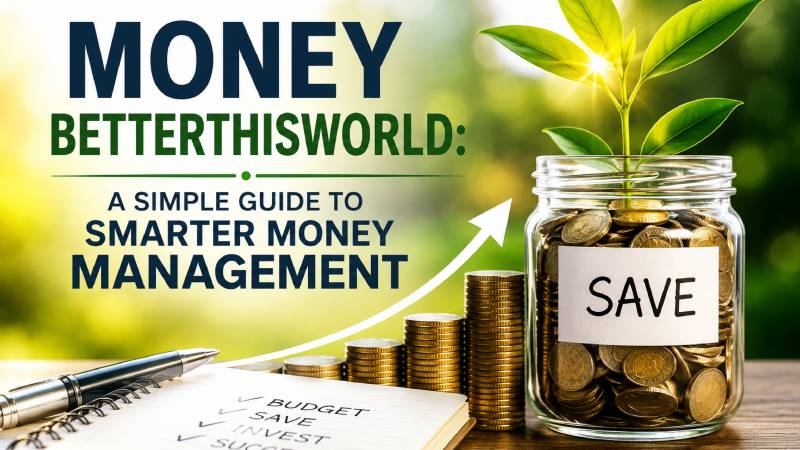
Money BetterThisWorld is a simple approach to understanding and managing money with greater purpose. Instead of treating money only as something to earn and spend, the idea focuses on using it to build financial stability, freedom, and a better future.
Current BetterThisWorld money content covers areas such as budgeting, saving, earning, debt management, investing, and purposeful spending. It is better understood as educational financial content rather than a bank, investment fund, or guaranteed-income program.
What Is Money BetterThisWorld?
Money BetterThisWorld is mainly a financial mindset and learning approach.
The central idea is straightforward: money should support your goals instead of controlling your life. This means knowing where your money goes, making thoughtful spending choices, building savings, and planning for the future.
It also encourages people to connect financial decisions with personal values and long-term goals.
Why Money Management Matters
Good money management can make everyday life easier.
When you understand your income and expenses, you can make better decisions. A simple financial plan can also help you prepare for unexpected costs and reduce unnecessary spending.
Money management is not only about becoming wealthy. It is also about having more control over your financial choices.
Build Financial Confidence
Financial confidence starts with knowledge.
Learning basic concepts such as budgeting, saving, debt, interest, and investing can make financial decisions feel less confusing.
You do not need to understand everything at once. Start with one topic and build your knowledge gradually.
Create a Simple Budget
A budget is one of the easiest ways to understand your financial situation.
Start by listing your monthly income. Then write down your regular expenses, including housing, food, transportation, bills, and other necessary costs.
After that, review your flexible spending.
You may discover small expenses that can be reduced without making major changes to your lifestyle.
Use Clear Spending Categories
A simple system can divide money into:
- Needs: Essential household and living expenses
- Wants: Entertainment, shopping, and non-essential purchases
- Savings: Emergency funds and future goals
- Debt: Payments toward loans or credit balances
- Giving or impact: Donations or causes that matter to you
The exact amounts will depend on your income and circumstances. There is no single budget that works for everyone.
Make Saving a Habit
Saving does not always require a large income.
The most important step is creating a regular habit. Even a small amount saved consistently can help build financial discipline.
An emergency fund can be especially useful because unexpected expenses can appear at any time.
Automating transfers to a savings account can make the process easier because the money is moved before it is accidentally spent.
Manage Debt Carefully
Debt can become expensive when payments and interest continue to grow.
A good starting point is to understand how much you owe, the interest rates involved, and the minimum payments required.
Paying bills on time can help avoid unnecessary fees. If you have several debts, creating a clear repayment strategy can make the process easier to manage.
The goal is not simply to eliminate debt quickly. It is to create a realistic plan that you can actually maintain.
Learn Before Investing
Investing can be part of long-term financial planning, but it comes with risk.
Before investing, it is important to understand the product, fees, potential returns, and possibility of losing money.
Beginners should avoid decisions based only on social-media trends or promises of quick profits.
Money BetterThisWorld content also emphasizes checking financial information and considering personal circumstances before acting on general financial guidance.
Think About Long-Term Growth
Building wealth usually takes time.
Consistent saving, responsible spending, and informed investing can be more sustainable than trying to make quick money.
Compound growth can become more powerful over longer periods, which is why starting with manageable amounts may still be useful.
Money and Personal Values
One interesting part of the Money BetterThisWorld idea is the connection between finances and personal values.
Money can pay bills and build savings, but it can also support goals that matter to you.
For some people, this could mean supporting family members, donating to a cause, choosing responsible businesses, or investing according to personal principles.
The important point is to make these choices intentionally.
Common Money Mistakes to Avoid
Financial progress can become difficult when people make decisions without a clear plan.
Common mistakes include:
- Spending more than you earn
- Ignoring small recurring expenses
- Having no emergency savings
- Taking on unnecessary high-cost debt
- Investing without understanding the risks
- Trusting promises of guaranteed profits
- Following financial trends without checking the facts
Avoiding these mistakes can be just as important as finding ways to increase income.
How to Start With Money BetterThisWorld
You do not need a complicated system to begin.
Start by tracking your spending for one month. Then identify your most important financial goal.
Next, create a realistic budget and choose a small amount to save regularly.
After your basic finances are organized, you can learn more about debt repayment and investing.
A Simple Four-Step Plan
Step 1: Know your numbers.
Understand your income, expenses, debts, and savings.
Step 2: Control spending.
Reduce unnecessary costs while keeping your important needs covered.
Step 3: Build protection.
Create savings for emergencies and unexpected expenses.
Step 4: Plan for growth.
Learn about suitable long-term financial options before investing.
Is Money BetterThisWorld a Financial Service?
No. The term should not automatically be understood as the name of a bank, investment company, or guaranteed money-making program.
BetterThisWorld describes its money material as educational content covering topics such as earning, budgeting, saving, donations, investing, and values-based spending.
Readers should verify important financial information and consider their own income, goals, location, tax rules, and risk tolerance.
Final Thoughts
Money BetterThisWorld is built around a simple message: use money with purpose.
Smart financial management is not about chasing quick wealth. It is about understanding your finances, spending carefully, saving consistently, managing debt responsibly, and learning before making investment decisions.
Small improvements can create meaningful progress over time. The best financial strategy is usually one that is realistic, consistent, and suited to your own goals. Visit gngmeaning for more details